Guides / Specification
Frozen shrimp quality defects: how to define, count and claim soft shell, broken pieces and dehydration
October 12, 2026
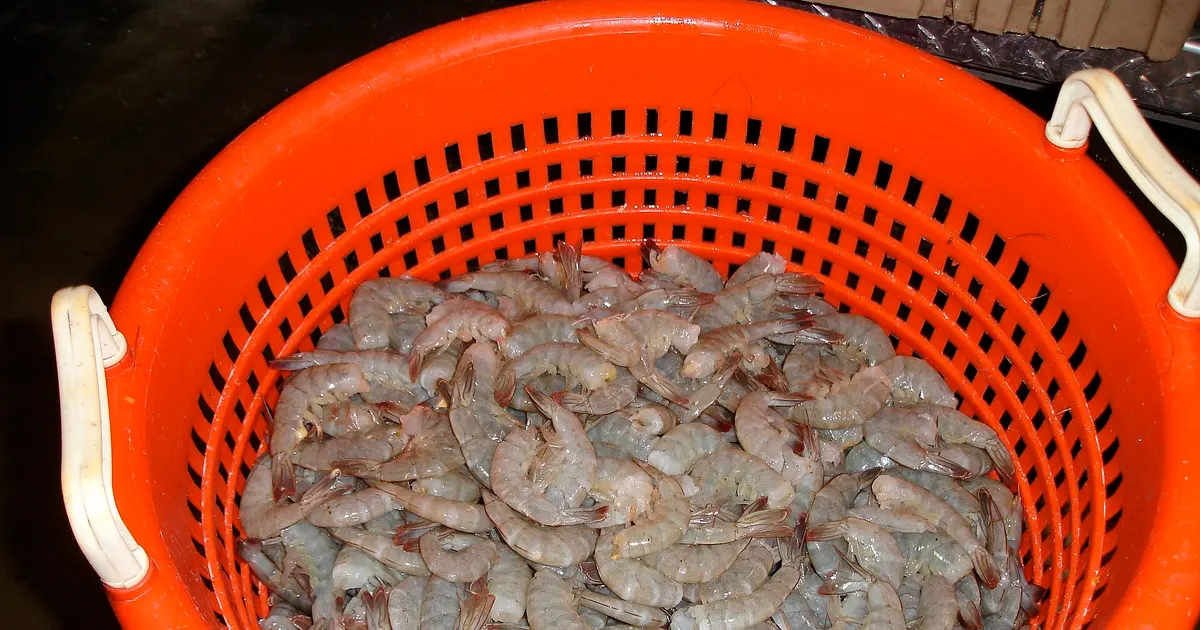
Most frozen shrimp claims do not start with a food safety problem. They start with a tray of shrimp that looks wrong: shells that slip off, pieces broken in half or white patches that cook up dry. These are quality defects, and they are expensive because they appear after payment and after storage.
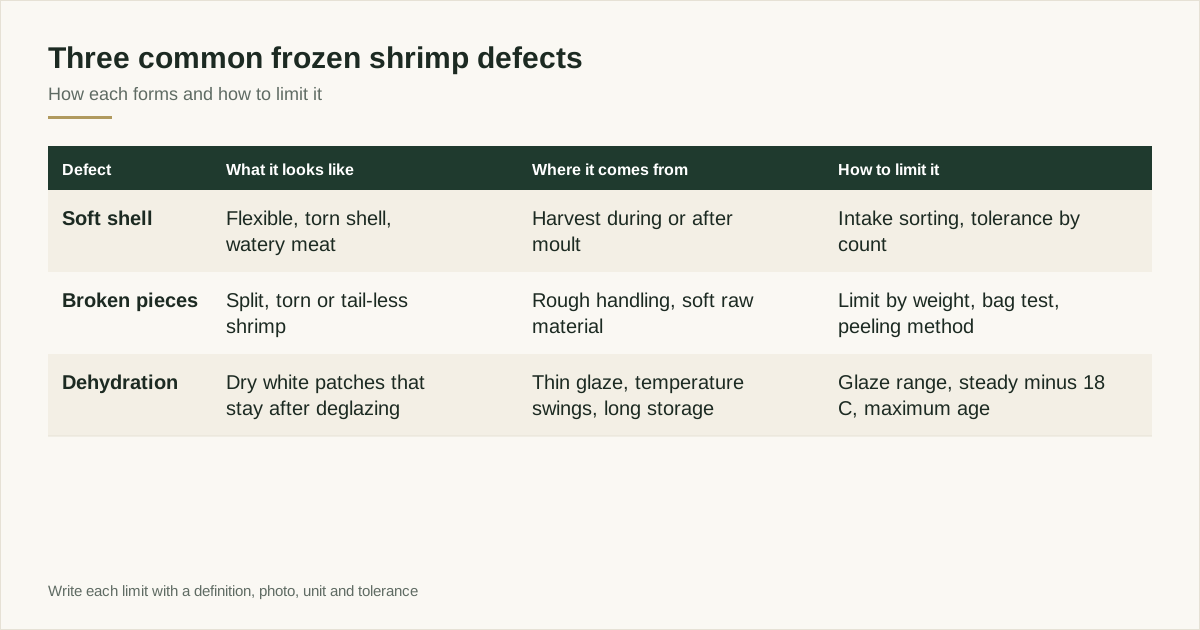
This guide covers the three most common defects, how each one forms and how to write limits and inspection steps that both sides can use.
Soft shell and loose shell
What it is. Shrimp grow by shedding their shell. Right after a moult, the new shell is thin and soft, and the shrimp meat is watery and under-filled. Shrimp harvested in this stage have a flexible shell that tears during processing, and the meat is soft and loses weight in cooking.
Why it matters. Soft-shelled shrimp peel badly, break easily and give poor texture. In shell-on product the soft shell separates from the meat and the shrimp look wrinkled. The meat is also lower in solid content, which hits the yield.
Where it comes from. The cause is in the pond. Farmers who harvest during or soon after the moulting peak bring in more soft shrimp, and plants cannot fix it afterwards. Intake sorting by shell hardness is the main control, with the plant testing the shrimp by feel or by a pressure test and rejecting the soft share.
How to limit it. Write a soft shell tolerance as a maximum share by count, and ask the plant to describe its intake test. A tolerance applies to the lot as a whole, and a plant that checks every delivery can keep to it.
Broken and damaged pieces
What it is. Broken product covers pieces that have lost a tail segment, split along the back or cracked in the middle, as well as shrimp with torn meat. In peeled shrimp, broken pieces include fragments of meat that are smaller than the count range. In shell-on shrimp, a broken shell with exposed meat counts.
Why it matters. Broken shrimp ruin the look of a bag, cook unevenly and cut the count of intact pieces. A buyer who sells by weight pays full price for broken pieces and sells them at a lower value, if at all.
Where it comes from. Rough handling, soft raw material, aggressive peeling machines and block freezing with heavy packing can all break shrimp. Weak shrimp are more likely to break, so soft shell and breakage often appear together.
How to limit it. State a maximum share of broken pieces by weight or count, and say whether tail-less pieces and fragments count. Ask the plant to describe its peeling method and its inspection step. For IQF product, a bag test shows breakage clearly, as described in our guide on IQF, semi-IQF and block frozen shrimp.
Dehydration and freezer burn
What it is. Dehydration is moisture loss from the surface of frozen shrimp. When a thin layer of ice sublimes from the shrimp, the exposed tissue turns dry and white, and the meat in those spots becomes tough and spongy. Freezer burn is the common name for deep dehydration.
Why it matters. Dehydrated areas cook up dry and taste flat, and they look poor even when frozen. A carton with widespread dehydration loses value fast.
Where it comes from. Three causes dominate. A thin or uneven glaze leaves the surface open. Temperature swings during storage and transport pull moisture out of the shrimp and refreeze it as frost. Long storage adds up the loss.
How to limit it. Specify a glaze range and a net weight method. Require a stable cold chain at minus 18 degrees Celsius or colder with temperature logs, and set a maximum age at arrival. Define dehydration by the share of surface area affected, for example light patches on a small part of the piece allowed and deep dehydration on more than a small share of the surface rejected. Our guide on glaze, net weight and yield explains why glaze matters for protection and how to check it.
Other defects that travel with these three
| Defect | Look | Likely cause |
|---|---|---|
| Black spot | Dark head, joints or shell edges | Delay or damage before freezing, see the guide on black spot |
| Foreign matter | Shell pieces, feathers, plastic or other items | Poor sorting or packing hygiene |
| Off odor | Ammonia, sour or fishy smell on thaw | Spoilage before freezing or thaw and refreeze |
| Gaping and poor texture | Mushy meat after thaw | Weak raw material, long thaw cycles |
| Uneven size | Mixed counts in a bag | Poor grading or mixed lots |
| Pink or orange discoloration in raw shrimp | Color shift from age or temperature | Slow chilling or storage swings |
Treat the table as a map of related problems. Several defects in one lot often share a root cause, such as a delay at harvest or a warm spell in storage.
How to inspect a lot
A practical inspection takes about an hour for each lot and creates a record that the plant can answer.
- Sampling. Draw cartons from several pallets and several rows, using an agreed sampling plan. Many buyers use a standard acceptance sampling table to set the number of cartons.
- Frozen check. Open the cartons frozen and look for ice crust, frost, clumping and glaze quality. Weigh a sample and record the glaze percentage.
- Thaw check. Thaw under controlled conditions, drain and spread the shrimp on a tray under standard light.
- Count defects. Count pieces with soft shell, breakage, dehydration and other defects, and record each as a share of the sample.
- Cook test. Cook a sample and note texture, taste and color.
- Photos. Photograph each defect with a ruler and the carton code visible.
Codex publishes a standard for quick frozen shrimps and prawns that defines several of these defects and the quality factors for them. Many buyers refer to it as a starting point for their own spec. Check the current text before you cite it in a contract.
Ready to price this spec? Get matched with a shrimp supplier
Preventing defects before they ship
Prevention beats claims. A buyer can reduce defects by asking the plant for three controls. The first is intake grading, in which staff check each delivery for shell hardness, color and freshness and reject shrimp that fall below the standard. The second is a final inspection on the packing line with defined limits and a stop rule if the share of defects rises. The third is a pre-shipment check on a sample from the finished lot, with photos stored under the lot code.
Pre-shipment inspection by an independent inspector adds another layer. The inspector visits the plant before loading, draws a sample under the sampling plan, checks defects and weights and issues a report. The cost is modest compared with the cost of a rejected container, and it gives both sides a shared record. Agree who pays and what the report must cover.
Cold chain control closes the loop. The plant should record the freezer exit temperature, the cold store temperature and the container temperature at loading, and the buyer should track the temperature during transit if a data logger is available. A logger placed inside a carton records the real conditions and settles disputes about dehydration.
Costs of defects and how to share them
A defect has a cost in three places: the lost weight of unusable product, the lost value of downgraded product and the cost of handling the claim. A buyer who sorts out broken pieces at arrival spends labor and loses yield, and a retailer who removes a bag from the shelf loses margin.
Agree on a simple scale for sharing the cost. For example, a small excess over the tolerance leads to a price adjustment, a medium excess leads to a credit note, and a large excess allows rejection of the lot. Put the scale in the contract so that both sides know the outcome in advance. This keeps the conversation about facts and avoids a long dispute.
Writing limits that stand up
A defect limit needs five parts.
- Definition. Describe each defect in words and attach photos.
- Unit. Choose count or weight, and say which.
- Tolerance. State the maximum percentage for each defect and for all defects together.
- Sampling. State the number of cartons and pieces, and how they are drawn.
- Remedy. State what happens when a lot exceeds the limit: credit, replacement or rejection, and at what level.
Link the remedy to the size of the failure. A small excess may justify a price adjustment, and a large excess may justify rejection. Our guide on payment terms and the first order timeline shows how balance payment and inspection can protect both sides.
Working with the plant after a claim
A claim goes best when the buyer sends a clear file within the agreed window: the carton codes, the inspection results, the photos and the temperature log. The plant then compares the lot with its retained sample, its production record and its intake record, and finds the cause.
Expect a root cause and a corrective action from a good plant. Weak answers such as natural variation or shipping damage without evidence deserve a follow-up. Repeated defects from the same plant are a reason to tighten the spec or change suppliers.
What to write in the request
- Defect list with definitions and photos: soft shell, broken, dehydration, black spot and foreign matter.
- Tolerance for each defect and for the total, with the unit.
- Sampling plan and inspection method on arrival.
- Glaze range and net weight method.
- Cold chain: maximum temperature, maximum age at arrival and temperature log.
- Claim window, evidence required and the remedy by level.
Next step
Take your last complaint, turn it into a defect definition with photos and add it to the request. Send your spec through the request form and we match you with up to 3 Vietnam processors that accept a written defect standard. They reply within 24 business hours, and you can compare how each one handles intake sorting and final inspection.
See also: the Codex CXS 92-1981 standard for quick frozen shrimp, explained.
Frequently asked questions
What counts as a defect in frozen shrimp?
Common defects include soft or loose shell, broken or damaged pieces, dehydration or freezer burn, black spot, foreign matter and off odor. The spec should define each one in words and photos and set a tolerance, since no lot is completely free of them.
How do I tell freezer burn from normal glaze loss?
Glaze loss leaves the shrimp bare but with its normal color. Freezer burn shows as dry white or pale patches on the shrimp that stay after the glaze is removed, and the meat feels spongy or tough when cooked. A thaw and cook test tells the difference.
How fast should I report a defect claim?
As soon as the lot is inspected, with photos, carton codes and counts. Many contracts set a claim window of a few days to a few weeks after arrival. Late claims are harder to trace to the plant's records, so agree on the window and the evidence before the first order.
Ready to price this spec?
Send your species, size grade and certificate list. We match you with up to 3 Vietnam processors and reply within 24 business hours.
Get matched with a shrimp supplier