Guides / Specification
Soaked shrimp explained: STPP, non-phosphate agents and what the label must say
October 25, 2026
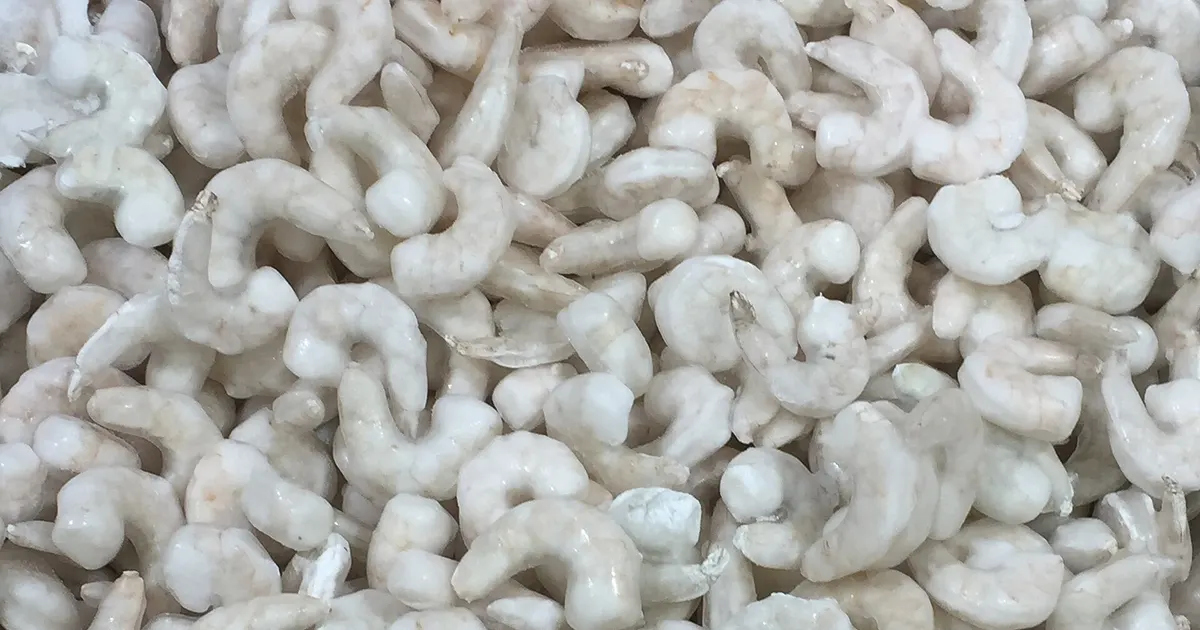
Open two cartons of frozen shrimp at the same size grade and the same glaze, thaw both, and the weights can still differ by several percent. The reason is often invisible on the quote: one plant soaked the shrimp in a phosphate solution and the other did not. Soaking is routine in shrimp processing, and it is legal when declared. It becomes a problem only when the buyer does not know it happened.
This guide explains what soaking does, which agents plants use, how the weight effect shows up in a quote and what to ask for in writing.
What soaking does to shrimp
Shrimp meat is mostly water. During peeling, handling and freezing it loses some of that water as drip, and the meat turns drier and tougher after cooking. A soak puts a dilute solution in contact with the shrimp for a set time, and the additive helps the proteins in the meat bind water. The shrimp lose less moisture on thawing and cook up plumper and more tender.
That benefit is real. It is also easy to push too far. A longer soak, a stronger solution or a warmer bath all increase the water the meat takes up. Weight gain is the measurable result, and plants that chase the highest yield can end up selling water by the kilogram.
Three variables decide the outcome:
- Concentration of the solution
- Soaking time and temperature
- Rinse and drain time before freezing
A well-run plant fixes all three in a written procedure and checks the shrimp weight before and after the soak.
The agents plants use
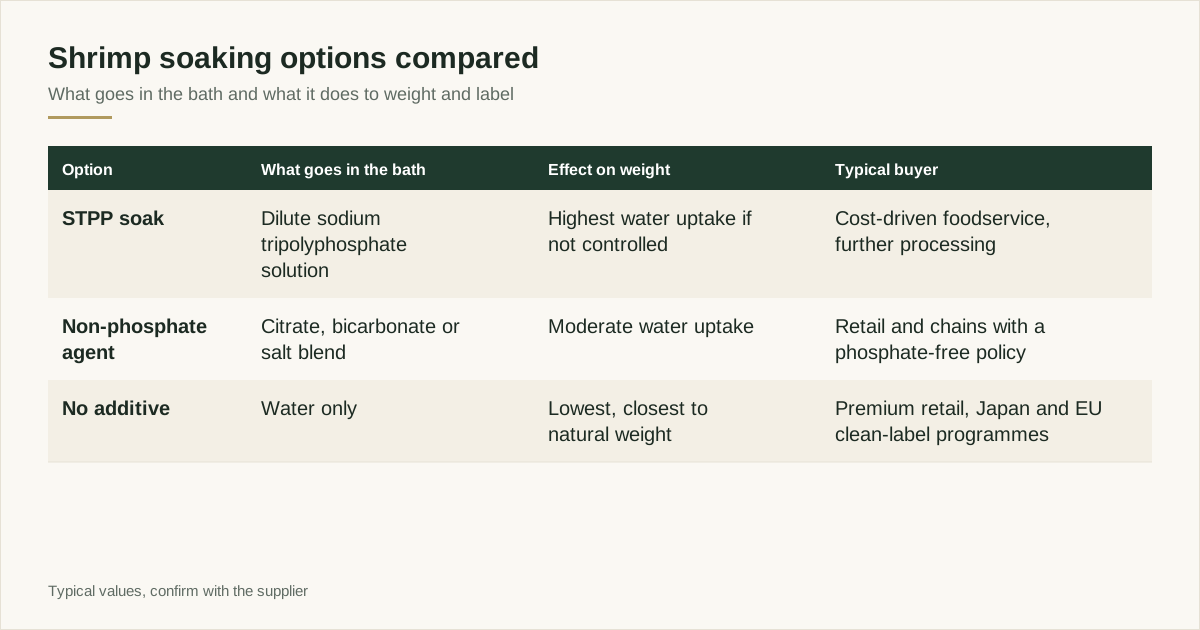
STPP is sodium tripolyphosphate. It is the traditional agent because it works well at low cost. It also adds phosphorus to the product, which is why some markets set limits or ask for a declaration.
Non-phosphate agents are blends built from other water-binding ingredients. Typical bases include citric acid or its salts, sodium bicarbonate, salt and sugars. They give moisture retention that is close to phosphate in many trials, with a different taste profile and sometimes a slightly softer bite. They are the usual answer when a buyer wants a phosphate-free label.
No additive means the plant uses only clean water and a cold chain. The shrimp drip a little more on thawing, the weight loss on cooking is a few points higher and the price per kilogram is usually a touch higher because the raw material carries no yield help.
| Option | What goes in the bath | Effect on weight | Typical buyer |
|---|---|---|---|
| STPP soak | Dilute sodium tripolyphosphate solution | Highest water uptake if not controlled | Cost-driven foodservice, further processing |
| Non-phosphate agent | Citrate, bicarbonate or salt blend | Moderate water uptake | Retail and chains with a phosphate-free policy |
| No additive | Water only | Lowest, closest to natural weight | Premium retail, Japan and EU clean-label programmes |
Concentrations and soak times differ by plant, size and product form. Treat any number you hear as a starting point and ask for the plant’s written procedure.
How soaking shows up in a quote
A soaked product usually looks cheaper per kilogram, and that is the first trap. If one plant offers a lower price and the second offers a higher price, the gap may be explained by water. Soaked shrimp weigh more for the same count of pieces, so a price per kilogram on gross weight hides the difference.
Compare quotes on a net shrimp weight basis after deglazing, and then compare the count per pound of the thawed shrimp. A properly soaked shrimp and a no-additive shrimp of the same grade often show a different count after thawing because one carries more water. Our guide on glaze, net weight and yield walks through the arithmetic, and the same method applies to soaking gain.
Ask each plant for three numbers on its own product:
- Weight gain from the soak, as a percentage of raw weight
- Glaze percentage on the frozen carton
- Thaw weight loss after a standard thaw test
With those three figures a buyer can calculate the price per kilogram of actual shrimp. Without them, only the headline price is visible.
Labeling and market rules
Every destination market treats additives in its own way. The common principle is that an additive added during processing should be declared, either in the ingredient list or in an additive statement on the pack or the product document. Rules differ on which additives are allowed, at what level and with which wording, and those rules change over time.
For the EU, check the food additive regulation and the current list of permitted additives for crustaceans. For the United States, check FDA guidance on shrimp processed with phosphates and the labeling expected on retail packs. Japan, Korea and Australia each have their own import checks, and importers there often write an additive restriction into the contract. The guide on shrimp certifications by export market covers the paperwork side.
Practical steps that keep a shipment clear:
- Put the permitted additive list into the product specification sheet.
- Ask the plant to declare any processing aid used in the soak, even when it does not stay in the final product.
- Keep the plant’s soak record for each production lot with the batch code on the carton.
- Test an arrival sample if the market sets a limit.
Ready to price this spec? Get matched with a shrimp supplier
Moisture, texture and what a chef notices
Water uptake changes more than weight. A heavily soaked shrimp feels slick, loses volume fast in a hot pan and can taste faintly soapy when the solution is strong. A lightly treated or untreated shrimp cooks with a firmer bite and a cleaner taste, and a chef notices it on the first tray.
Foodservice buyers who serve shrimp as the centre of the plate often prefer the lighter treatment because the shrimp keeps its shape. Buyers who bread or batter shrimp may accept more water uptake because the coating hides the texture and the yield matters more. Describe the end use to the plant so it picks the soak that matches.
A simple sensory check on arrival helps. Cook a standard sample from three cartons, weigh before and after cooking and note the shrink. Shrink above the figure agreed in the spec is evidence of excess water, and the record gives you grounds for a credit.
How to test soak gain on a sample
You do not need a laboratory to see whether a product carries excess water. Take frozen shrimp from three cartons and run the same simple test on each one. Weigh a frozen sample, deglaze it fully under cool running water and weigh the deglazed shrimp. Thaw a second deglazed sample in a closed container in a refrigerator for a fixed time, pat dry and weigh again. The loss between those two weights is the thaw drip.
Then cook a third sample in simmering water for a fixed number of minutes, cool it and weigh again. Cook loss in a lightly treated shrimp is usually lower than in an untreated one, and a very high cook loss after a heavy soak is a sign that water left the meat easily. Write the three results next to the lot code.
Run the same test on a competing offer if you have a sample of it. Two products with the same declared count and glaze can differ by a few percentage points on drip and cook loss, and that gap is the real difference in cost per edible kilogram.
Questions to ask the plant
Plants that run a controlled soak answer these questions without hesitation. Plants that do not may need a day to find the record.
- Which agent do you use, and at what concentration and temperature?
- How long is the soak, and how long is the drain before freezing?
- What is the average weight gain, and what is the maximum you allow?
- Do you keep a soak log for each lot, and can you send the log for my lot?
- Do you run a separate line for no-additive product, or share tanks?
- Which test do you use to check moisture or weight before shipment?
Shared tanks matter more than many buyers expect. A plant that runs phosphate and no-additive product through the same tanks needs a clean-down step between runs, and a buyer with a strict clean-label policy should ask how the plant proves that step. Ask for the clean-down procedure in writing if the policy is strict.
Contract wording that avoids disputes
Soaking disputes usually come from silence in the contract. Add a short clause that states the allowed treatment, the maximum soak weight gain and the test method, and attach the plant’s own written procedure as an appendix. State what happens when a lot exceeds the limit: a price adjustment, a credit or a rejection, depending on the size of the excess.
Add a second clause on records. The plant keeps the soak log for each lot for a set period and sends it on request within a stated time. Add a third clause on changes: the plant must tell the buyer before it changes the agent, the concentration or the process. A change that seems small to the plant can change the weight and the label, so the buyer needs advance notice.
What to write in the request
Put the soaking policy in the first message, not in the claim after delivery.
- Treatment: STPP, non-phosphate agent or no additive.
- Maximum soak weight gain, if STPP or an agent is allowed.
- Glaze percentage and the requirement that price refers to net weight.
- Label wording and additive declaration required for the destination market.
- Test method for moisture or weight on arrival, and the tolerance.
- Documents: additive record, product specification sheet and lot traceability.
Next step
Decide which treatment your customer and your market accept, then write the six lines into one request. Send your spec through the request form and we match you with up to 3 Vietnam processors that run the treatment you named. They reply within 24 business hours, and you compare offers on net shrimp weight rather than gross carton weight.
Frequently asked questions
What is STPP and why is it used on shrimp?
STPP is sodium tripolyphosphate, a food additive that helps shrimp hold water during processing and freezing. Plants soak shrimp in a dilute solution so the meat keeps its weight and firmness after thawing. When the soak is long or the solution too strong, the shrimp take up extra water and the buyer pays for it.
Can I order shrimp with no phosphate at all?
Yes. Many Vietnam plants run a no-additive line, and some run a non-phosphate agent based on citric acid, salt or bicarbonate blends. Write the requirement into the spec and ask for the additive list on the product specification sheet. Expect a modest price difference and slightly higher drip loss after thawing.
Does the label have to say that shrimp were soaked?
In most markets an additive in the product has to appear in the ingredient list or the additive statement. The exact wording depends on the destination, so check the current rule for your market and keep the plant's additive record for each lot.
Ready to price this spec?
Send your species, size grade and certificate list. We match you with up to 3 Vietnam processors and reply within 24 business hours.
Get matched with a shrimp supplier