Guides / Certification
FDA import alerts on shrimp: what triggers detention and how an importer avoids it
November 8, 2026
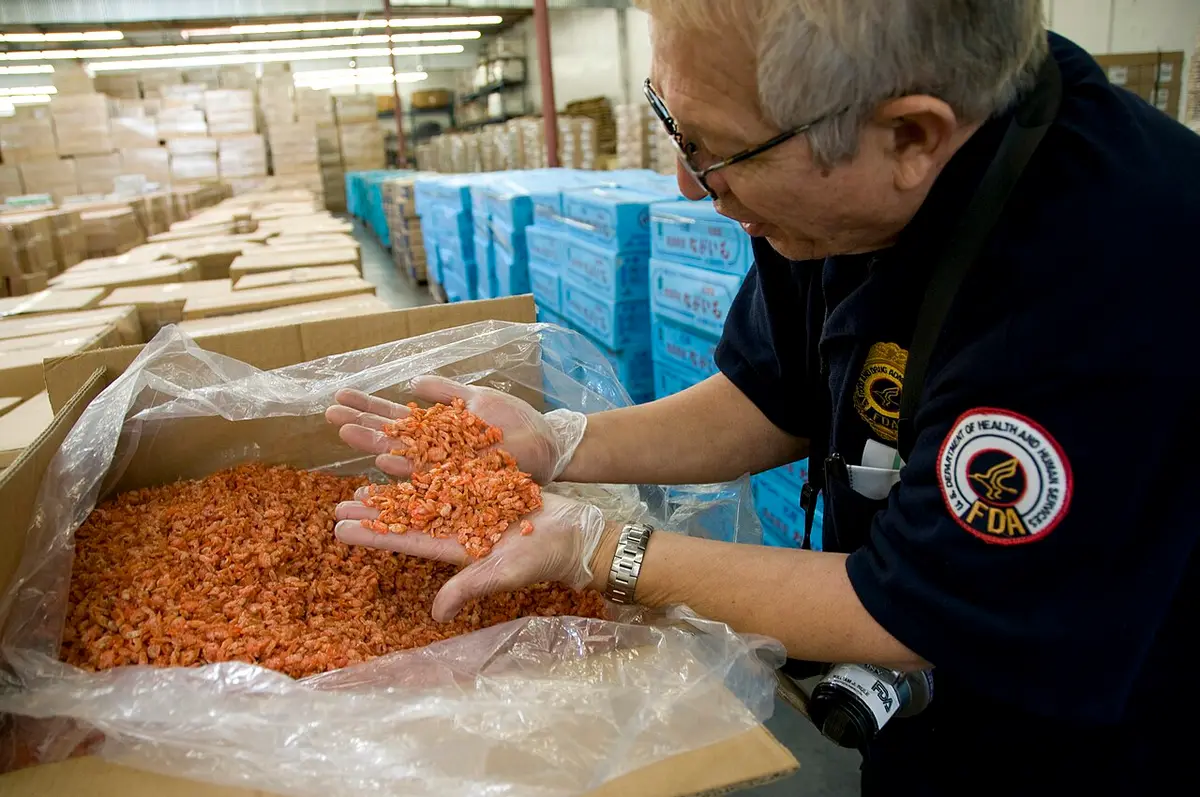
An FDA import alert on shrimp lets the agency detain a listed firm’s product at the US border without opening or testing it first. The alert names firms, not whole countries, and it stays in force until the firm proves it has fixed the cause. For a buyer of Vietnam shrimp the practical task is simple to state and easy to skip: before the first order, check the plant’s name against the current alert pages for aquaculture drugs, chloramphenicol, nitrofurans, HACCP and Salmonella, then write the plant’s duty to stay off them into the contract. This guide shows what each alert covers, what evidence releases a detained lot and which checks an importer can run.
How an import alert works
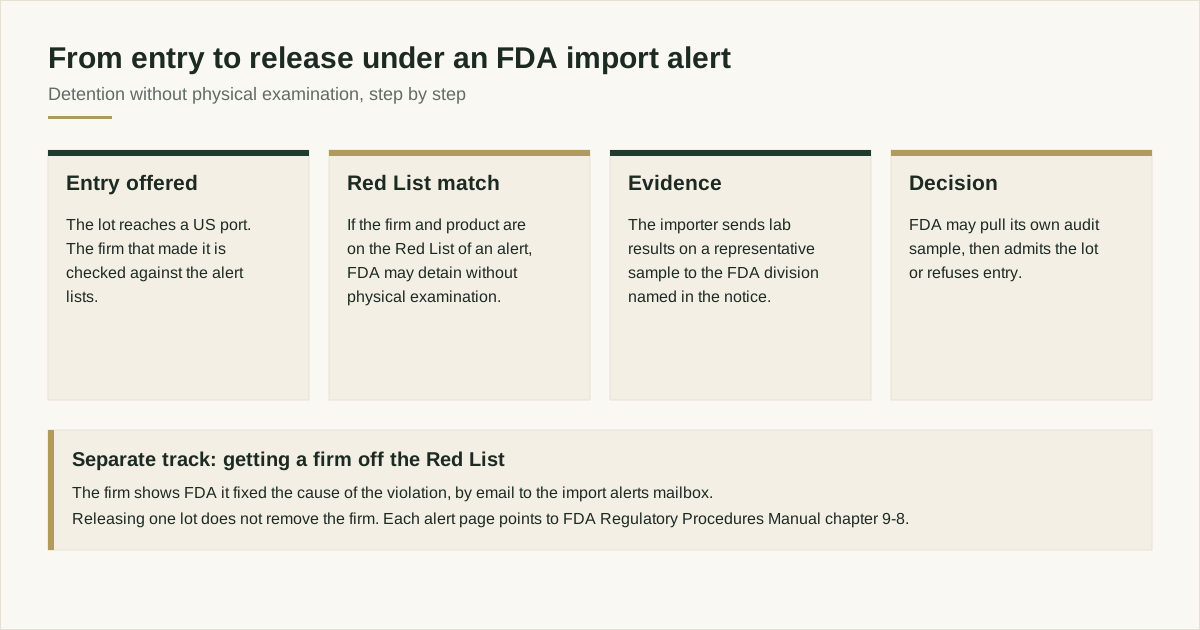
FDA defines an import alert as a notice to the public, importers and FDA staff about products and firms that appear to violate FDA law. Most food alerts use detention without physical examination (DWPE): when a listed product is offered for import it is detained and refused unless the importer shows FDA that the product lacks the violation. Firms on the Red List are subject to DWPE.
Two things follow for a buyer. First, the listing attaches to the firm that made the product, so a clean lot from a listed plant is still detained until you provide proof. Second, the burden of proof sits with the importer. The alerts we read describe the same route: private laboratory analysis of samples that represent the shipment, sent to the FDA division named in the detention notice. FDA may take audit samples of its own before it decides.
The lists change often. FDA’s Vietnam page showed 15 seafood alerts when we opened it on 10 October 2026, with several revised within the preceding weeks. Treat any list in an article, including this one, as a map and check the FDA page on the day you place an order.
The alerts that apply to shrimp from Vietnam
| Alert | Covers | Why it exists |
|---|---|---|
| 16-124 | Aquaculture seafood, unapproved drugs | Drugs used in farming leave residues. Firm listings name fluoroquinolones such as enrofloxacin and ciprofloxacin, malachite green and leucomalachite green, gentian violet and others |
| 16-127 | All seafood, chloramphenicol | The alert covers all seafood. The Red List names individual firms by country, and Vietnam has many, several of them for shrimp |
| 16-129 | Seafood, nitrofurans | Nitrofuran metabolites persist through cooking and FDA considers them carcinogenic and genotoxic. Several Vietnamese firms are listed, mostly for shrimp and frog legs |
| 16-120 | Seafood HACCP | A foreign processor that does not meet the seafood HACCP rule (21 CFR Part 123) is listed |
| 16-81 | Seafood, Salmonella | FDA expects zero or non-detectable Salmonella. Shrimp appears many times on this Red List, mainly from other countries |
| 16-138 | Seafood prepared under insanitary conditions | FDA page dated 8 October 2026. Salmonella and Listeria monocytogenes are the main pathogens cited |
Alert 16-124 excludes chloramphenicol and nitrofurans, which have their own alerts, so a firm can sit on more than one list for different reasons. The Vietnam page also shows alerts for cooked seafood with E. coli, for ready-to-eat seafood with Listeria and for decomposition and histamine. Our guide to antibiotic residue testing for EU and US entry covers the drug-residue side in detail. Import Alert 16-105 covers decomposition: a Vietnamese plant’s shrimp can be read under it, and FDA’s Vietnam page may list it for a given firm, so search it by firm name as well (see FDA decomposition criteria). Undeclared sulfite is a labelling matter under a separate food alert, and our guide to sulfite in shrimp explains it.
What puts a firm on the list
The alert pages give the triggers in different words, and three patterns repeat.
- Residue findings. Positive tests for a banned or unapproved drug in a firm’s product lead to a listing for that product. Alert 16-129 states that products that test positive for nitrofurans are refused entry.
- HACCP failures. Alert 16-120 lists firms that did not have or did not implement a HACCP plan that meets Part 123. The Red List notes cite gaps such as unidentified hazards, missing critical control points, weak monitoring records, no corrective action and no verification procedures. FDA can find these by inspecting the firm, by a foreign remote assessment, by an importer inspection or by reviewing entry records.
- Sanitation and pathogens. Alert 16-138 gives three routes: two or more positive lots of one product from the same maker, epidemiological or traceback evidence and inspections that show sanitation controls are missing or poorly applied.
None of these is a matter of a single bad day. Records and testing are what separate a plant that is listed from one that is not.
What releases a detained lot
- Sample. Take representative samples from the detained lot, sealed and labelled with the entry number.
- Laboratory. Use a private laboratory that can test for the listed hazard. For the Listeria alert, FDA states that testing supporting admission must come from a LAAF-accredited laboratory since 2 December 2025. Check each alert for its own lab requirement before you pay for a test.
- Submission. Send the report to the FDA division compliance office named in the detention notice, with the entry details.
- Decision. FDA may collect its own audit sample first. It then admits the lot or refuses entry.
Our guide to shrimp pre-shipment inspection shows how to draw a sealed sample at the plant, so that you hold a retained sample from the same lot before it ships.
How a plant gets off the list
A plant does not leave a Red List by passing one shipment. The firm must show FDA that it resolved the conditions behind the violation, so that FDA is confident future entries will comply, and it applies by email to the import alerts mailbox on each alert page. The alerts refer to Chapter 9-8 of FDA’s Regulatory Procedures Manual. The type of proof depends on the alert:
- HACCP (16-120). A letter on the corrective actions and documents such as the HACCP plan and hazard analysis, a process flow diagram with times and temperatures, five days of critical control point monitoring records, five days of sanitation monitoring records, training records and photographs.
- Insanitary conditions (16-138). A root cause analysis, corrective actions, an environmental monitoring programme, written sanitation procedures with training records and validation studies and five production codes or five days of monitoring records. FDA may inspect or rely on a foreign authority or a third-party audit.
- Residues (16-124, 16-127, 16-129). The general standard applies: show that the cause is resolved.
For a buyer the lesson is timing. A plant that is on a list needs documented corrective action and an FDA review, and your order cannot wait for that. Choose a plant that is not listed.
Ready to price this spec? Get matched with a shrimp supplier
Checks an importer can run before the first order
The US importer has duties of its own. FDA’s page on the Foreign Supplier Verification Program says it excludes fish and fishery products that are subject to and in compliance with the seafood HACCP regulations. Those importers fall under 21 CFR 123.12 instead, which lets an importer choose from affirmative steps, among them:
- getting the foreign processor’s HACCP and sanitation monitoring records for the lot;
- getting a lot-by-lot or continuing certificate from a government inspection authority or a competent third party;
- inspecting the processor’s facility on a regular basis;
- keeping an English copy of the processor’s HACCP plan with a written guarantee of compliance;
- testing the product periodically.
The importer must keep English records of what it did and what it found. Write the same list into your supplier file, and add four lines to the order:
- Firm identity. The exact legal name and address of the plant as it will appear on the entry, so that you can search the alert pages for it.
- Alert check. A statement by the plant that it is not on any FDA import alert, plus your own check on the order date and again before shipment.
- Residue programme. A copy of the plant’s testing plan and the lab reports for the raw material and the lot.
- Cost of detention. Who pays for sampling, laboratory work, storage and return if a lot is detained because of the plant’s listing.
Our guide to shrimp certifications by export market explains which certificates a plant may hold, and our guide to pond-to-plant traceability shows the records that make a residue finding traceable to a farm.
The full sequence from market rule to border is in our guide to importing frozen shrimp from Vietnam.
Next step
Write the four lines above into your next request and send them through the request form. We match you with up to 3 Vietnam processors, and they reply within 24 business hours. Ask each one for its legal name as used on US entries, so that you can check the alert pages yourself before you compare quotes.
See also: FSVP and 123.12 for seafood importers.
Sources
- FDA, Import Alerts: definition, DWPE and Red List
- FDA, import alerts for Vietnam (country page)
- FDA Import Alert 16-124, aquaculture seafood and unapproved drugs
- FDA Import Alert 16-127, all seafood and chloramphenicol
- FDA Import Alert 16-129, seafood and nitrofurans
- FDA Import Alert 16-120, seafood HACCP
- FDA Import Alert 16-81, seafood and Salmonella
- FDA Import Alert 16-138, seafood prepared under insanitary conditions
- FDA Import Alert 16-39, ready-to-eat seafood and Listeria
- FDA, Foreign Supplier Verification Programs for importers of food
- 21 CFR 123.12, importer verification for fish and fishery products (Cornell LII)
Frequently asked questions
What is an FDA import alert?
It is an FDA notice to staff, importers and the public about products and firms that appear to violate US food law. Under detention without physical examination, a shipment from a listed firm can be held at entry without being tested first. The importer then has to show FDA that the shipment does not have the listed problem.
How does a shrimp lot get released after detention?
The importer sends evidence that the lot does not have the problem, usually a private laboratory analysis of representative samples, to the FDA division named in the detention notice. FDA may take its own audit sample before it decides. If the evidence is weak or missing, the lot is refused entry.
How does a processor get off an import alert list?
The firm must show FDA that it has resolved the conditions behind the violation, so that FDA can be confident future shipments will comply, and it applies by email to FDA. One clean shipment is not the test. The alert pages refer to Chapter 9-8 of FDA's Regulatory Procedures Manual.
Which import alerts matter most for shrimp from Vietnam?
FDA's Vietnam page lists 15 seafood alerts. For shrimp the main ones are 16-124 for unapproved aquaculture drugs, 16-127 for chloramphenicol, 16-129 for nitrofurans, 16-120 for seafood HACCP failures and 16-81 for Salmonella. Check the current Red List by firm before you place an order.
Ready to price this spec?
Send your species, size grade and certificate list. We match you with up to 3 Vietnam processors and reply within 24 business hours.
Get matched with a shrimp supplier