Guides / Specification
Shrimp color grades explained: how to write a raw and cooked color spec that holds up
October 20, 2026
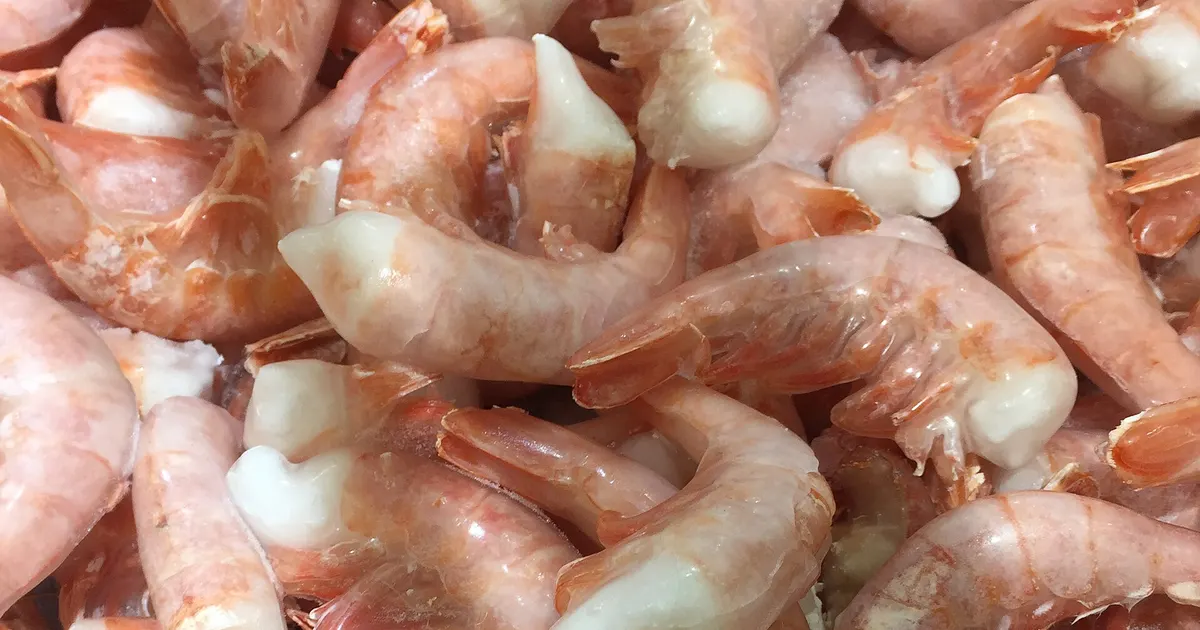
Color is the first thing a shopper sees in a bag of shrimp and the first thing a chef checks on a tray. It is also one of the least standardised parts of a shrimp spec. Two plants can use the word premium for two different shades, and the dispute shows up only after the container opens.
This guide separates raw color from cooked color, explains what moves each and shows how to write a color spec that both sides can check.
Raw color and cooked color are two different things
Raw color is the shell and body color of the uncooked shrimp. Vannamei looks pale grey to translucent, with a faint blue or pink tone. Black tiger shows banded dark and light shell. Raw color changes with species, with the pond environment, with how recently the shrimp moulted and with handling after harvest.
Cooked color is the color after heat sets the pigment. The red-orange color in cooked shrimp comes from astaxanthin, a carotenoid that sits bound to protein in the shell and flesh of a raw shrimp. Heat releases it and turns it visible. A shrimp with more astaxanthin cooks to a deeper red-orange. A shrimp with little cooks to a pale pink.
A buyer who sells raw shrimp cares about raw color because it signals freshness and quality at the shelf. A buyer who sells cooked shrimp cares about cooked color because that is the product. Many programmes need both, since the raw shrimp are cooked by the end user and the color after cooking shapes the plate.
What moves color
| Factor | Effect on raw color | Effect on cooked color |
|---|---|---|
| Species | Sets the base shell color and banding | Black tiger cooks deeper red than vannamei |
| Diet in the pond | Natural food adds pigment | More natural pigment gives a deeper orange |
| Moulting stage | Soft, recently moulted shrimp look pale | Pale shells give lighter cooked color |
| Harvest and handling | Damage and delay darken or dull the shell | Delay and black spot cause dull, uneven color |
| Soaking and additives | Changes surface look | Can lighten or dull cooked color |
| Cooking time and temperature | Not relevant | Overcooking dulls and browns, undercooking leaves pale |
| Freezing and glaze | Dehydration bleaches the surface | Freezer burn shows as pale patches after cooking |
The table is a guide to the main drivers. Real lots show a mix of several factors, and plants control some of them better than others.
How plants and buyers score color
No single scale is used worldwide. Common practices include four methods.
- Photo chart. The buyer and plant agree on photos that show acceptable and unacceptable raw or cooked shrimp, and attach the chart to the spec. This is cheap and effective.
- Physical color card or fan. A printed card with numbered shades, sometimes made by a feed or pigment supplier, is held next to the sample under standard light. The number becomes the grade.
- Instrument reading. A colorimeter measures lightness and the red and yellow axes, and the spec sets a range for each.
- Plant grade names. Some plants use grade names such as A, B and C or first, second and third color, defined internally. These help a quote but only if the buyer sees the plant’s definition.
A buyer who relies on grade names without a chart invites a dispute. The same name can mean different things at two plants, or at one plant in two different seasons.
An example of a simple scoring scheme
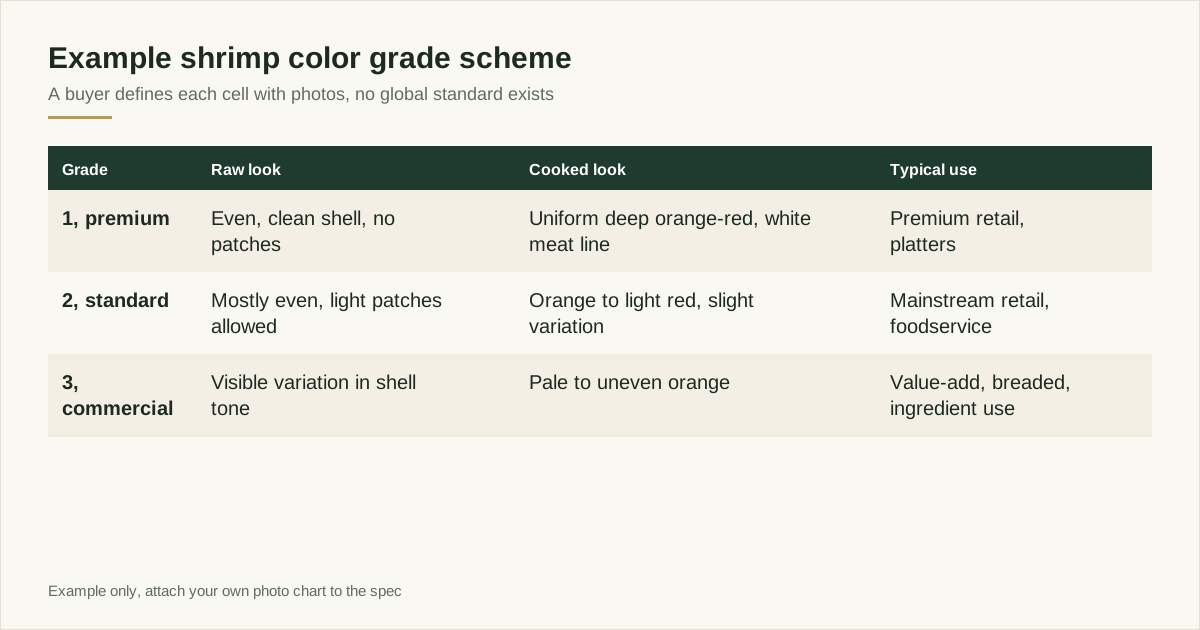
The table below shows how a buyer might define raw and cooked color grades in a spec. It is an example, not an industry standard, and a buyer should adapt it with its own photos.
| Grade | Raw look | Cooked look | Typical use |
|---|---|---|---|
| 1, premium | Even, clean shell, no patches | Uniform deep orange-red, white meat line | Premium retail, platters |
| 2, standard | Mostly even, light patches allowed | Orange to light red, slight variation | Mainstream retail, foodservice |
| 3, commercial | Visible variation in shell tone | Pale to uneven orange | Value-add, breaded, ingredient use |
Define each cell with a photo. Words such as deep or pale mean different things to different people.
Setting a tolerance
A color spec needs a tolerance, since no lot has perfect uniformity. Express it as the maximum share of pieces outside the target grade, for example a small percentage in the next grade down and none in the grade below that. Specify the sample size and the way you count, for example two hundred pieces drawn from several cartons.
Also set the inspection conditions. Color looks different under a warm bulb and under daylight tubes. Specify a standard light, a white or grey background and a thaw procedure before inspection. For cooked samples, specify the cooking method, time and cooling, since the same raw shrimp can cook to different shades with different treatment.
How to inspect a lot
A color check on arrival is quick if the setup is ready.
- Draw sample cartons from several pallet positions and several rows.
- For raw color, thaw under controlled conditions, drain and spread the shrimp on a grey tray under standard light.
- For cooked color, cook a fixed sample by the agreed method, cool it and compare with the photo chart or the card.
- Count pieces by grade and calculate the share in each.
- Photograph the tray with the card in the frame and a ruler for scale.
- Record the carton codes and keep the photos with the lot file.
Send the file to the plant promptly. The plant can then compare its retained sample and its process records for that lot, and the supplier relationship improves when the data is clear.
Color and other defects
Poor color often points to another problem. Dull and patchy raw color can mean a long time between harvest and chilling. Gray or brown tones can be early melanosis. Pale white patches after freezing point to dehydration or freezer burn. A dull cooked color can signal over-cooking or a soak that was too strong.
Treat color as one of several quality signals and read it together with the others. Our guides on black spot in shrimp and on frozen shrimp quality defects explain how to tell these causes apart.
Ready to price this spec? Get matched with a shrimp supplier
Color and the production chain
Color depends on decisions made long before the plant. A farm that harvests shrimp at the right stage and chills them quickly delivers a cleaner raw color than a farm that harvests during a moult or leaves shrimp in warm water. A collector who stacks shrimp in deep bins without ice causes pressure marks and dull patches. A plant that sorts by color at intake can set aside lower grades before they enter the main line.
A buyer who cares about color should ask the plant how it grades at intake, which staff do it and with what light and chart. Plants that grade only at the end of the line cannot fix the raw material, and a plant that grades at intake can steer each lot to the right customer. The same logic appears in our guide on shrimp processing forms, where decisions at intake shape yield and cost across the whole line.
Color after storage
Frozen shrimp change color slowly in storage. Dehydration bleaches the surface, so a shrimp with a thin glaze and a long storage time looks paler at the edges and in the tail. Oxidation can dull the red tones in cooked shrimp, and light in a retail freezer case can fade the surface of a bag over weeks.
A buyer can limit these effects with a solid glaze, a stable cold chain and a maximum age at arrival. For retail bags, opaque or low-light packaging helps. When a color complaint arrives, ask for the production date and the storage record first, since many apparent color defects are storage defects and not raw material defects.
Color across species and markets
Different markets prefer different looks. Japan values clean, uniform raw color and a straight, clean body, and its buyers inspect closely. US retail often asks for an attractive cooked orange for cocktail rings and platters. EU buyers often look at both color and the absence of defects, and some retailers set their own color charts.
Species matters too. Black tiger gives a deeper cooked color with visible stripes, and vannamei gives a lighter orange. A buyer who switches from one species to the other must update the color chart, since the same grade name no longer refers to the same shade. The guide on vannamei versus black tiger describes the differences.
Building a color chart from your own samples
The best color chart comes from real product. Collect samples from several lots of the grade you want and from lots you reject. Thaw or cook them under the agreed method, place them on a grey background under standard light and photograph them with a ruler and a neutral reference card. Pick photos that show the target, the lowest acceptable shade and a clear reject for each grade.
Label each photo with the lot code, the date and the method, and print the chart on matte paper so glare does not change the look. Share the file with the plant and ask it to confirm in writing that its regular output matches the target photos. Review the chart once a year, since species mix and farm practice change the baseline over time. A chart that both sides signed is the strongest protection against color disputes.
Additives and color claims
Plants cannot add dye to shrimp without declaring it, and many markets restrict or ban colorants in shrimp. A deep color that comes from added dye can lead to rejection and a fine. Ask the plant to state in the specification that no colorant is added, and ask which treatments touch the shell. Check the rules for your market with your importer.
What to write in the request
- Raw color: photo chart or card, with the grade needed and a tolerance.
- Cooked color: the cooking method, the chart and the target grade.
- Inspection conditions: light, background, thaw and sample size.
- Species, since color depends on it.
- Statement that no colorant or dye is used.
- Claim window and the evidence required: photos with scale and carton codes.
Next step
Build a small photo chart from sample cartons, mark the grades you accept and attach it to the request. Send your spec through the request form and we match you with up to 3 Vietnam processors that can work to your chart. They reply within 24 business hours, and each one can send photos of its regular production for the same grade.
See also: the black tiger shrimp reference: farming systems, counts and colour.
Frequently asked questions
Is there an international standard for shrimp color grades?
No single global standard exists. Plants and buyers use their own color cards, photo charts or instrument readings, and the grades are defined in the contract. The safest way to avoid a dispute is to attach a photo chart or physical card to the specification and agree on a tolerance.
Why does cooked shrimp color vary between lots of the same size?
Raw color, diet in the pond, species, moulting stage, cooking time and temperature all change the cooked color. A lot of shrimp with a pale raw color usually cooks to a paler orange than a lot with a deeper raw color, even at the same size.
Can a buyer measure color with an instrument?
Yes. A colorimeter reads lightness and the red and yellow axes, and a buyer can set a target range for a cooked sample. Instrument readings need a standard sample preparation, because the reading changes with temperature and surface moisture.
Ready to price this spec?
Send your species, size grade and certificate list. We match you with up to 3 Vietnam processors and reply within 24 business hours.
Get matched with a shrimp supplier