Guides / Specification
Breaded and tempura shrimp: how coating ratio sets price, label and plate quality
October 6, 2026
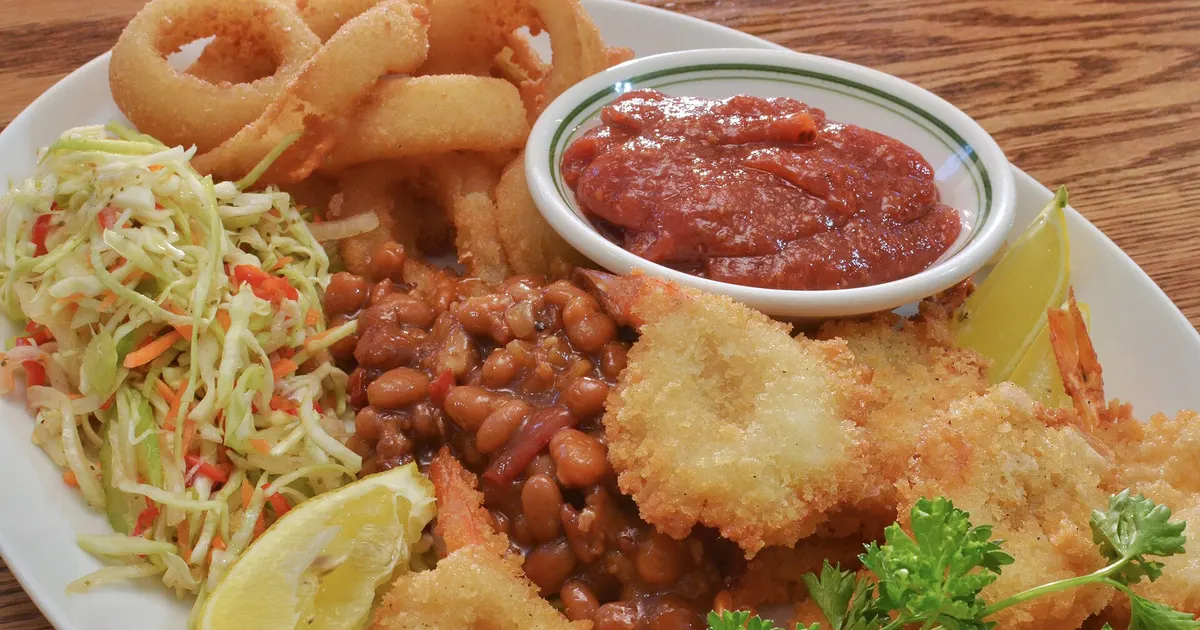
A breaded shrimp is part shrimp and part crumb. The share of each decides the price, the label, the plate yield and how the product looks after frying. Two cartons marked with the same count and the same price per kilogram can contain very different amounts of shrimp.
This guide explains coating ratio, how to measure it and which lines to write into a spec for breaded and tempura shrimp from Vietnam.
What a breaded shrimp is made of
A breaded shrimp starts with a peeled shrimp, usually vannamei, prepared in one of several shapes: round, butterflied, fantail or nobashi style. The line then applies coatings in layers.
- Pre-dust. A light dry powder helps the next layer stick to the shrimp surface.
- Batter. A wet mix of flour, starch, water and seasoning coats the shrimp. Tempura batter is thinner and lighter, and standard batter is thicker.
- Breading. Crumbs stick to the batter. Standard breadcrumbs give a dense crust and panko crumbs give a coarse, airy one. Coconut flakes and other coatings are used for specialty items.
- Par-frying. Many plants fry the product briefly in oil to set the coating, then freeze it. Raw breaded product skips this step.
- Freezing and packing. An IQF freezer sets the shape, and the product goes into bags and cartons.
Every layer adds weight. The more batter and crumb, the lower the shrimp content, and the cheaper the shrimp portion becomes for the plant. That is the lever that makes a low price possible.
What coating ratio means
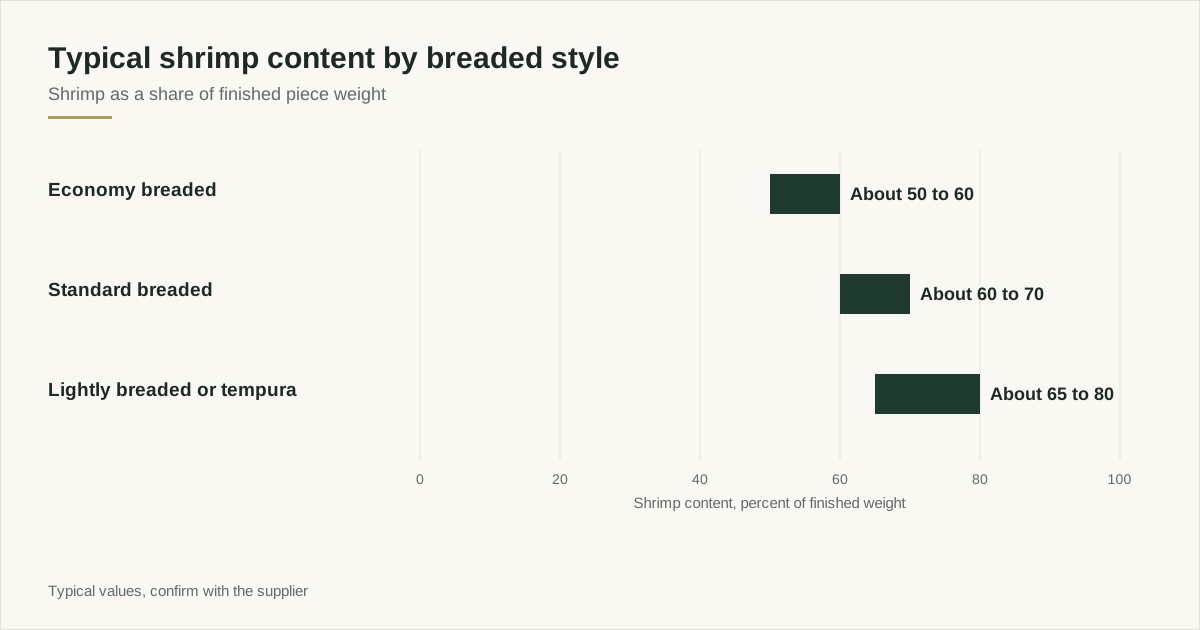
Coating ratio is the weight of the coating divided by the weight of the finished piece. A piece that weighs 20 grams with 7 grams of coating has a coating ratio of 35 percent and a shrimp content of 65 percent.
| Style | Typical shrimp content | Typical coating | Positioning |
|---|---|---|---|
| Economy breaded | About 50 to 60 percent | About 40 to 50 percent | Value foodservice, school and catering |
| Standard breaded | About 60 to 70 percent | About 30 to 40 percent | Mainstream retail and foodservice |
| Lightly breaded or tempura | About 65 to 80 percent | About 20 to 35 percent | Premium retail, restaurant, Japan style |
These ranges show how the market is usually positioned and vary by plant and product. Confirm the actual figures in each offer.
The count per pound of the finished piece also changes meaning. A breaded shrimp described as 21/25 may mean the count of the finished breaded piece, or the count of the raw shrimp before coating. State which one you mean. Our guide on size grades and pricing explains how counts work for raw shrimp.
Legal and label rules
Markets set labeling and sometimes composition rules for breaded seafood. In the United States, federal standards of identity set a minimum shrimp content by weight for breaded shrimp and a higher minimum for lightly breaded shrimp, and products below the minimum cannot be sold under those names. Other markets use their own naming and quality rules, and retailers often add stricter limits in their own specifications.
Check the current rule for your market and write the minimum shrimp content into the spec, along with the name the product will carry on the pack. Also agree the allergen declaration. Breaded shrimp typically contains wheat and may contain egg and soy, and crustaceans are an allergen in themselves. The label must reflect the real recipe, so ask the plant for the full ingredient list of batter and breading.
How to measure coating ratio
A simple test works at any lab or kitchen.
- Weigh a frozen sample of ten to twenty pieces.
- Thaw the sample partly and scrape or peel off the coating from each piece, or soak and rinse according to the agreed method.
- Blot the shrimp and weigh the clean shrimp.
- Calculate shrimp content as the clean shrimp weight divided by the original frozen weight.
- Repeat on samples from several cartons and take the average.
Method matters, since a hard scrape removes some shrimp and a gentle rinse leaves some coating. Agree on the method in the contract and ask the plant for its own results with the same method on each lot.
Raw breaded versus par-fried
| Point | Raw breaded | Par-fried |
|---|---|---|
| Plant step | Coat and freeze | Coat, short fry, freeze |
| End-user cooking | Fry from frozen for a few minutes | Heat from frozen for a shorter time |
| Texture | Fresh crisp, shrimp fully cooked in the kitchen | Set crust, quicker finish |
| Shelf life | Shorter, since raw shrimp and raw batter | Slightly longer |
| Oil content | Lower at the plant, set in the kitchen | Higher, since the plant adds frying oil |
Raw breaded product gives the freshest bite, and par-fried product is more forgiving for a kitchen that cannot control fryer time. Match the choice to the customer’s equipment and training.
Specs that matter on the finished piece
A breaded shrimp spec needs lines that a raw shrimp spec does not.
- Shrimp content: minimum percent by weight, with the test method.
- Piece weight and count: weight per piece after coating, with a tolerance, and the number of pieces per kilogram.
- Shape: round, butterfly, fantail or nobashi, with tail-on or tail-off.
- Crumb type: standard breadcrumb, panko or other, with color target.
- Batter system: tempura style or thicker batter, and any seasoning.
- Fry state: raw breaded or par-fried, with the oil type and the maximum oil content for par-fried.
- Defects: coating breakage, bare spots, double pieces, shell fragments and clumping.
- Cooking instructions: time and temperature in a fryer and an oven.
Our guide on shrimp processing forms explains how the raw form changes cost and yield before coating.
Ready to price this spec? Get matched with a shrimp supplier
Quality problems to look for
Four problems cause most complaints.
Coating loss. The crumb falls off the shrimp in the bag or in the fryer. It usually points to poor batter adhesion, thawed and refrozen product or rough handling. Check the bottom of a carton for loose crumb.
Bare spots. Areas without batter show a poor line setup. They fry unevenly and look poor on the plate.
Cluster and breakage. Pieces freeze together or crack. A good IQF line keeps them separate. Ask for the freezing method and check a sample.
Greasy or dark product. Old frying oil gives a dark, greasy crust on par-fried shrimp. Ask for the oil change schedule and the oil quality checks.
Shrimp raw material for breaded lines
Breaded lines mostly use vannamei at mid to small sizes, because the coating hides small cosmetic faults and the price must fit the product. Shrimp are often soaked to hold moisture through frying, so the soaking rules matter. A heavily soaked shrimp can lose water in the fryer and shrink inside the crust, leaving a gap. Our guide on soaking, STPP and non-phosphate agents covers the options and the label rules.
Black spot and soft shell still matter, since the cut shrimp show through a thin tempura batter. Ask the plant about its intake sorting and its defect limits for the raw material.
Cooking guidance and the plate
The end user cooks breaded shrimp from frozen, and the instructions on the carton decide whether the plate comes out right. A fryer instruction states the oil temperature, the time and the load. An oven instruction states the temperature and the time. A good plant tests the instructions on its own product and prints them on the pack and the carton.
Ask the plant to run a cooking trial at your kitchen conditions, or run it yourself on a sample. Check the color of the crust, the crunch, the doneness of the shrimp inside and the oil absorption. A crust that browns too fast or a shrimp that stays under-cooked points to a mismatch between the coating system and the cooking method. The fix may be a change in crumb type, a change in batter or a change in the instructions.
Oil absorption matters for health claims and cost. A product that absorbs a lot of oil in the fryer loses crispness faster and costs more per portion to serve. Ask for the plant’s data on oil uptake for the product you plan to buy.
Costing a breaded programme
The price of a breaded shrimp has three main parts: the shrimp, the coating and the processing. The shrimp share follows the shrimp content, so a product with a high content costs more per kilogram. The coating share is cheaper per kilogram than shrimp, which is why economy lines lean on it. Processing adds labor, energy and oil for par-fried product, and packaging adds a smaller share.
To compare two quotes, calculate the price per kilogram of shrimp content: divide the price per kilogram of finished product by the shrimp content as a fraction. A product at a lower price with 55 percent shrimp can cost more per kilogram of shrimp than a product at a higher price with 70 percent. Use the same method for every offer and ask each plant to confirm its measured content.
Cold chain and storage
Frozen breaded shrimp should stay at minus 18 degrees Celsius or colder from plant to kitchen. Temperature swings pull moisture out of the crust and cause ice crystals, and the crust becomes soft or flakes off. Set a maximum age at arrival and require a temperature log. The cartons should show the production date and the lot code, together with the cooking instructions.
What to write in the request
- Product style: breaded or tempura, shape and tail rule.
- Shrimp content minimum and the test method, written as a percent of finished weight.
- Piece weight, count and tolerance.
- Fry state and oil requirements.
- Ingredient list and allergen statement to match the label.
- Defect limits for coating, shape and shell.
- Packing: bag size, pieces per bag and cartons per pallet.
- Documents: product specification, lot test results and allergen information.
Next step
Write the shrimp content and the piece weight first, since they set the price, then add the other lines. Send your spec through the request form and we match you with up to 3 Vietnam processors that run coating lines. They reply within 24 business hours, and each one can send a sample with its measured coating ratio.
See also: the PDTO shrimp specification: peeled, deveined, tail on.
Frequently asked questions
What is coating ratio in breaded shrimp?
Coating ratio, also called pick-up, is the weight of batter and breading as a share of the total product weight. If a 100 gram piece carries 35 grams of coating, the coating ratio is 35 percent and the shrimp content is 65 percent. A price per kilogram means little until you know this figure.
Is there a legal minimum shrimp content for breaded shrimp?
In the United States, federal standards of identity set a minimum shrimp content for products sold as breaded shrimp and a higher minimum for lightly breaded shrimp. Other markets apply their own labeling and quality rules. Check the current text for your market and write the minimum into the spec.
Should I buy raw breaded or par-fried shrimp?
Raw breaded shrimp is fried by the end user from frozen and gives the freshest result, but it needs a fryer program. Par-fried shrimp has a short fry at the plant, sets the coating and cooks faster in the kitchen. Choose based on the customer's equipment and the crispness they expect.
Ready to price this spec?
Send your species, size grade and certificate list. We match you with up to 3 Vietnam processors and reply within 24 business hours.
Get matched with a shrimp supplier