Guides / Specification
Shrimp for dumplings and dim sum: raw material specs that protect bite, color and yield
October 21, 2026
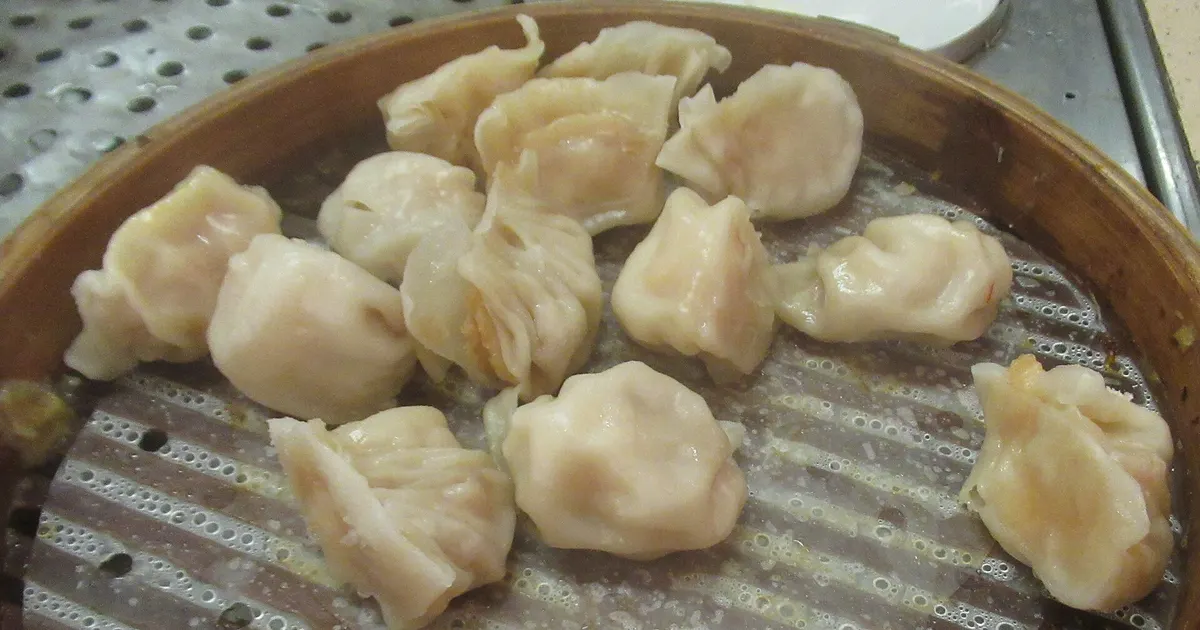
A dumpling gives a shrimp nowhere to hide. The wrapper is thin or translucent, the filling is steamed or fried, and the customer bites straight into the shrimp. A dim sum kitchen can tell within one bite whether the shrimp had good bite, clean flavor and the right color.
This guide covers the raw material specs that dumpling and dim sum makers write for shrimp from Vietnam, and the tests that predict how the shrimp will behave in the steamer.
What the filling needs from the shrimp
Dumpling filling asks four things of the shrimp.
- Bite. The meat should snap when you bite it, with a clean, slightly springy texture. Soft or mushy meat ruins the dumpling.
- Low water release. Shrimp that release water in the steamer make the filling wet and the wrapper soggy. Low drip and a stable moisture level protect the product.
- Clean color. Raw shrimp for dim sum look white to light grey and turn pink when steamed. Black spot, gray patches or yellowing stand out through a thin wrapper.
- Clean flavor. Any off taste, ammonia note or chemical flavor from a heavy soak shows in a mild filling.
These needs push the spec toward fresh raw material, careful handling, light treatment and stable freezing.
Size, form and cut
Dumpling and dim sum products fall into two groups.
Whole shrimp fillings, such as the translucent shrimp dumpling known as har gow, use peeled and deveined shrimp of a mid size so each dumpling holds one or two pieces, or a few cut pieces. The shrimp must look whole and clean when seen through the wrapper.
Chopped or minced fillings, such as shumai and many Vietnamese and Western-style dumplings, use smaller shrimp or broken pieces that the maker cuts. Size matters less for the look and more for the texture and the cost.
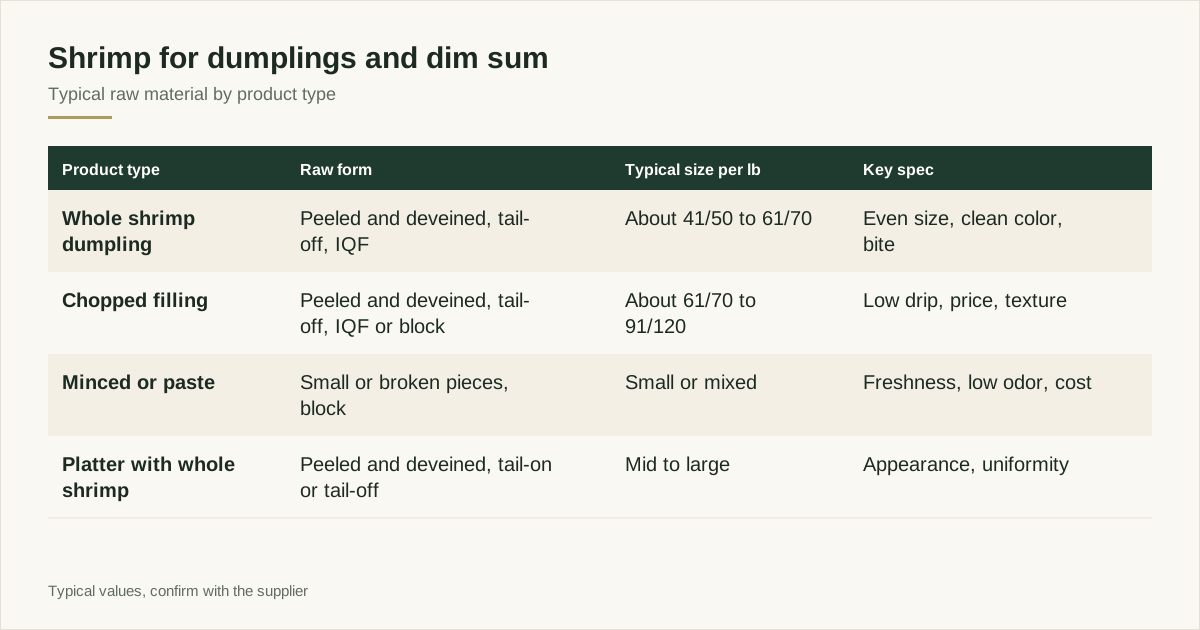
| Product type | Typical raw form | Typical size range | Key spec |
|---|---|---|---|
| Whole shrimp dumpling | Peeled and deveined, tail-off, IQF | About 41/50 to 61/70 per pound | Even size, clean color, bite |
| Chopped filling | Peeled and deveined, tail-off, IQF or block | About 61/70 to 91/120 per pound | Low drip, price, texture |
| Minced or paste | Small or broken pieces, block | Small or mixed | Freshness, low odor, cost |
| Dim sum platters with whole shrimp | Peeled and deveined, tail-on or tail-off | Mid to large | Appearance, uniformity |
The ranges are typical and vary by customer. Ask the maker for the piece weight and work back to the count. Our guide on size grades and pricing explains how counts convert to piece weight.
Plants that supply dumpling makers usually run a dedicated peeled and deveined line with cold rooms to keep the product cold during handling. Deveining must be clean, since a visible vein shows through a translucent wrapper. The guide on shrimp processing forms describes how forms affect yield and cost.
Treatment and drip loss
Treatment is the most debated line in a dim sum spec. A light water-retention soak helps the meat hold moisture through freezing and steaming, so it keeps its bite. A heavy soak adds water that leaks out in the steamer, thins the filling and softens the bite.
Some dim sum kitchens prefer no additive, and others use a controlled soak with a stated maximum weight gain. Neither approach is right in all cases. The spec should state the treatment, the maximum soak gain and the maximum drip loss on thaw. Our guide on soaking, STPP and non-phosphate agents covers the options and label rules.
A simple drip test predicts steamer behavior. Thaw a measured sample under controlled conditions, drain it for a fixed time and weigh it again. Many makers set a maximum percent loss and reject lots that exceed it.
Texture and the steaming test
Plants and makers use a steaming test as the final judge. The test runs as follows.
- Thaw a sample of shrimp under a standard procedure.
- Prepare a basic filling or steam the shrimp plain in a small steamer for a set time.
- Cool the sample and judge bite, flavor, color and weight loss.
- Compare against a retained reference sample that the buyer has approved.
Write the test method into the contract and record the result for each lot. The weight loss in steaming, the color after steaming and the bite score tell the buyer more than any laboratory number.
Freezing, packing and storage
Dumpling makers handle shrimp in cold rooms and prefer IQF for peeled shrimp, since loose pieces thaw evenly and can be counted. Blocks suit minced fillings, because the maker chops or grinds the block anyway. The guide on IQF, semi-IQF and block frozen shrimp explains the choice.
Packs of 1 to 2 kilograms or 2 to 5 pounds in master cartons are common, and some makers ask for larger bags to suit their line speed. Glaze should be as low as the cold chain allows, since the water from the glaze adds drip on thaw. Frozen storage at minus 18 degrees Celsius or colder with stable temperature protects bite, and temperature swings damage the meat structure and increase drip.
Specify a maximum age at arrival. Shrimp that sit in cold storage for a long time lose bite even when stored well.
Yield in the steamer and in the kitchen
A dumpling maker cares about weight in three places: the raw shrimp weight at the start, the filling weight after mixing and the finished dumpling weight after steaming. Each step loses or gains some weight, and the maker sets the target piece weight for the finished product. The shrimp contribution is the first number in that chain.
If the shrimp release more water than expected, the filling loses weight and the dumpling may come out under the declared weight. If the shrimp hold water well, the finished weight rises and the filling stays plump. The test of a lot is therefore the weight change from thaw to steamed, not only the count and the glaze. Record the three weights for each lot and keep them next to the lot code.
A plant that supplies dumpling makers regularly learns the customer’s numbers and runs its soak and glaze to match them. Share your numbers early and ask the plant to confirm what it can hold within each lot.
Ready to price this spec? Get matched with a shrimp supplier
Raw material freshness and handling before the plant
Dim sum quality starts with fresh raw shrimp. Shrimp that sit for a long time between harvest and processing lose bite, and the loss is permanent. Ask the plant how it limits the time between harvest and the start of peeling and how it measures it. Plants that use ice at the farm, short transport routes and quick intake sorting deliver better raw material for dumplings than plants that rely on long collector routes.
Handling during peeling also matters. Machine peeling can bruise the meat and leave marks, and hand peeling is gentler but slower. Plants that supply dumpling makers often use a mix of both with an inspection belt. Look at a sample for bruising, torn meat and shell fragments, and ask about the plant’s own checks.
Species and origin can shape bite too. Some makers prefer whiteleg shrimp from certain provinces, because they know how the shrimp from those areas behave. If your recipe depends on a specific bite, test samples from more than one plant and record the results.
Hygiene and safety
Many dumplings are raw when they enter the kitchen and cook fully in the steamer, so the end cook step controls most microbial risk. The plant still needs a strong hygiene system, since the shrimp are handled by hand and shipped frozen, and defects in handling carry into the finished dumpling. Ask for the plant’s microbiological test results for the lot, its sanitation records and its allergen controls.
Residue testing also applies, as for any shrimp. Our guide on antibiotic residue testing explains what records to request. Crustaceans are an allergen, and a dumpling maker with other products must keep shrimp allergen control in its own plant and declare it on the pack.
Defects that fail a dumpling
- Black spot and dark veins. They show through the wrapper and look dirty.
- Residual shell. Fragments of shell in a peeled shrimp are a quality and safety issue.
- Soft or mushy texture. It signals poor raw material, heavy soak or thaw cycles.
- Excess drip. Water release from the shrimp wets the filling.
- Off odor. Even a faint ammonia note shows up after steaming.
- Mixed size. A wide spread leads to uneven filling weight per dumpling.
Define each defect with a photo and a tolerance, as described in our guide on frozen shrimp quality defects.
Working with the plant on a trial
Start a dumpling programme with a small trial lot. Ask the plant to produce the shrimp to your spec, to keep a retained sample and to send a full set of lot records. Run your steaming test on the trial lot and compare it with your reference. Share the numbers with the plant: drip loss, steamed weight loss, bite score and color.
Repeat the trial on a second lot a few weeks later. The two results show whether the plant holds the same quality from one lot to the next. A plant that responds quickly to the numbers and adjusts its soak or its freezing is a good match for a recurring programme.
What to write in the request
- Product use: whole shrimp dumpling, chopped filling or minced paste.
- Species, form and tail rule, with piece weight and count range.
- Treatment: no additive or a stated soak, with the maximum gain.
- Drip loss limit on thaw and the test method.
- Steaming test: method, reference sample and pass criteria.
- Pack: IQF or block, bag size, glaze limit and net weight basis.
- Defect limits and photos.
- Documents: specification sheet, lot test results, traceability.
Next step
Send the dumpling weight, the filling recipe and your steaming test method with the request. Send your spec through the request form and we match you with up to 3 Vietnam processors that run peeled and deveined lines for dumpling makers. They reply within 24 business hours, and each one can send samples for your steaming test.
Frequently asked questions
What size shrimp do dumpling makers use?
It depends on the product. Whole-shrimp dumplings such as shrimp har gow use mid sizes, often in the 41/50 to 61/70 range per pound, so each dumpling holds one or two pieces. Minced or chopped fillings use smaller or broken shrimp. The maker sets the size from the dumpling weight and the filling recipe.
Why does bite matter so much for dim sum shrimp?
A dumpling customer judges the shrimp by its snap. Meat that is mushy or watery fails, and meat that is too firm feels rubbery. Bite depends on raw material freshness, handling, treatment and freezing, so the maker tests it by steaming a sample.
Can I use soaked shrimp for dumpling filling?
Some makers do, in a controlled way, since a light treatment helps the meat keep water and bite through steaming. Too much soak releases water into the filling and makes the wrapper soggy. State the treatment and the maximum drip loss in the spec.
Ready to price this spec?
Send your species, size grade and certificate list. We match you with up to 3 Vietnam processors and reply within 24 business hours.
Get matched with a shrimp supplier