Guides / Specification
Sushi ebi from Vietnam: butterfly shrimp specs that Japan buyers actually write
October 27, 2026
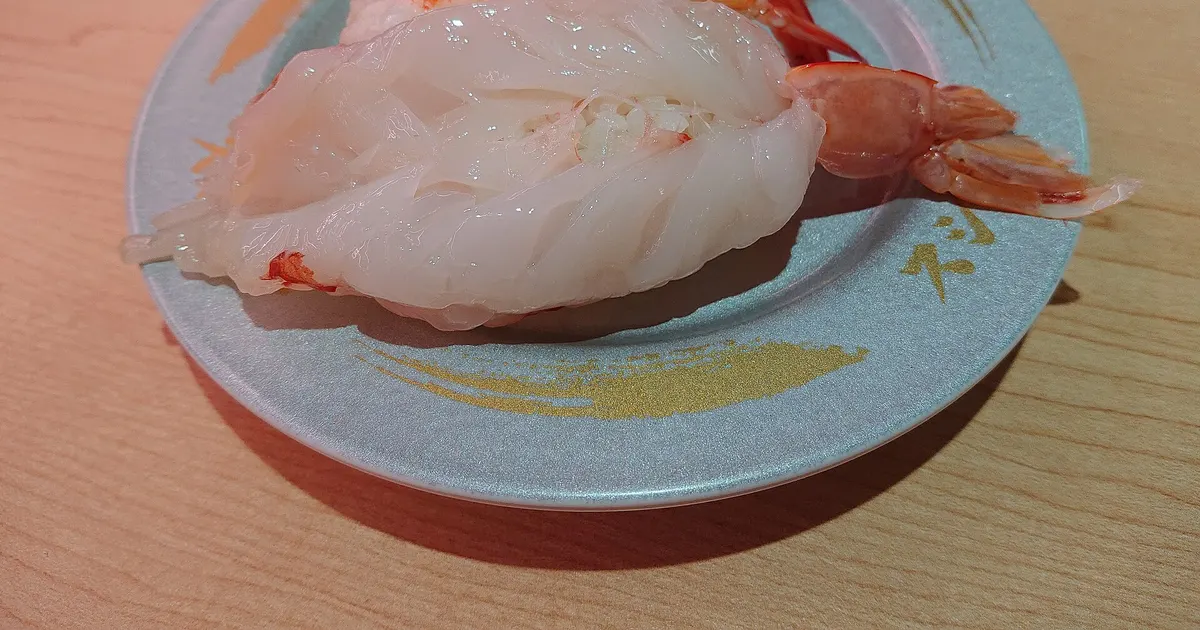
A piece of ebi on a sushi counter looks simple: a pink and white butterfly of shrimp lying across a block of rice. Behind it sits a set of tight specs on length, color, shape and pack that Japan buyers have refined over decades. A Vietnam plant that meets them can supply sushi chains, supermarkets and wholesalers in Japan and in other markets that copy Japanese style.
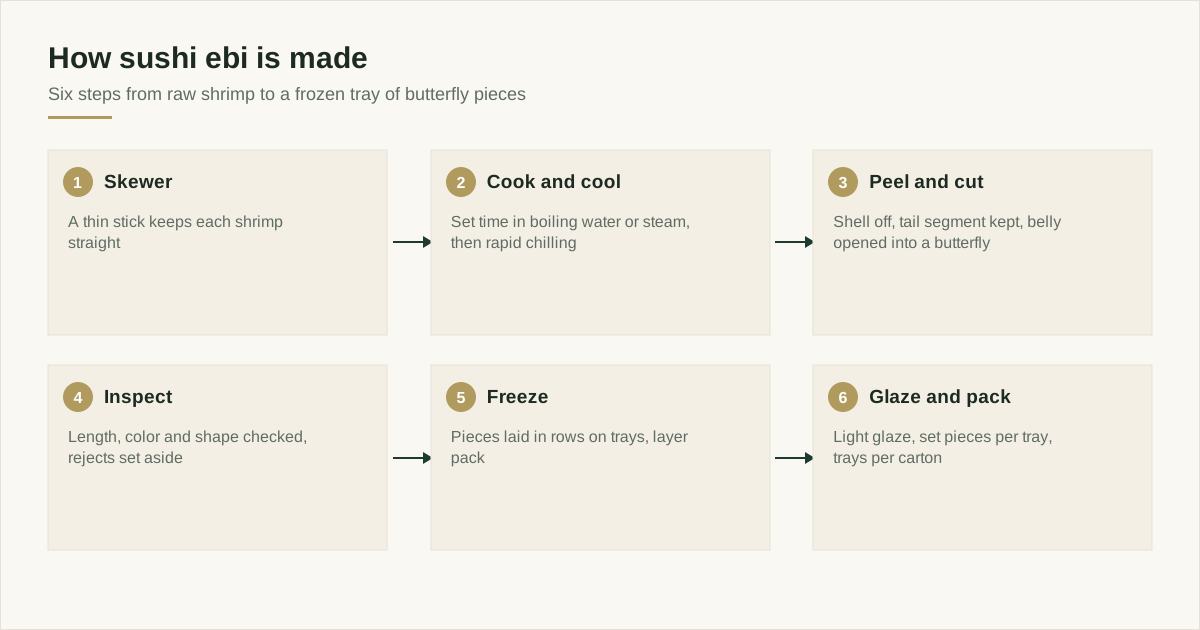
This guide walks through how sushi ebi is made and what to write in the spec.
What sushi ebi is
Sushi ebi is cooked shrimp prepared for use as a topping. The shrimp is peeled, usually with the last tail segment left on, cut along the belly and opened into a butterfly shape, then laid flat. The top of the body shows red stripes against a white background, and the cut underside shows clean white meat.
Two other products look similar and differ in purpose. Nobashi is a raw, stretched shrimp for frying, as described in our guide on nobashi shrimp. Ebi for sushi is cooked and meant to be eaten as is after thawing. Mixing up the two in a request leads to the wrong quote.
How a plant makes it
A typical line has seven steps.
- Raw material. The plant picks vannamei or other species with firm meat, good shell color and no black spot, in a narrow size range.
- Skewering. A thin stick passes along the body of each shrimp, keeping it straight. Skewering is usually done by hand and takes skill.
- Cooking. The skewered shrimp cook in boiling water or steam for a set time, long enough to cook through and short enough to protect the texture.
- Cooling. Shrimp go into cold water or a chiller. Rapid cooling stops cooking and locks in color.
- Peeling and butterfly cut. Workers remove the skewer and the shell, leave the tail segment and cut open the belly to form the butterfly.
- Inspection and sorting. Staff check length, color and shape and set aside pieces that do not meet the spec.
- Freezing and packing. Pieces are laid in rows on a tray, frozen as a layer pack, glazed lightly and packed in cartons.
Because sushi ebi is ready to eat, the plant must run the cooked and cooling steps in a clean zone, separate from raw handling. Our guide on cooked shrimp processing and Listeria control explains the controls and the records a buyer should request.
What Japan buyers specify
Japan buyers write sushi ebi specs in detail. Expect lines like these.
| Spec line | Typical content | Why it matters |
|---|---|---|
| Species and form | Species named, peeled, tail-on, butterfly | Sets look and cost |
| Length | A range in centimetres, with a minimum | Must fit the rice block |
| Weight per piece | A narrow band in grams | Controls cost per piece |
| Pieces per tray | A fixed number, such as 20 to 30 | Easy count at the counter |
| Color | Red stripes, white meat, no gray patches | Visual quality |
| Shape | Flat, even butterfly, intact tail | Presentation on rice |
| Treatment | No colorant, limited additives, stated clearly | Clean-label expectations |
| Pack | Layer pack in trays, set number of trays per carton | Protects shape |
Figures vary by customer and programme, so ask for the buyer’s own spec sheet and a sample tray before quoting.
Sizing: length and weight matter more than count
Raw shrimp are sized by count per pound. Sushi ebi is sized by the length and weight of the finished cooked piece, because the topping has to match the rice block. A piece that is too short leaves rice showing, and a piece that is too long hangs over the edge.
Japan buyers therefore set a minimum length and a narrow weight band, and they count pieces per tray. A plant that works backwards from the finished piece picks the right raw size, taking into account cook loss and trimming. Cooked weight is lower than raw weight, as the guide on cooked shrimp explains, and the butterfly cut removes part of the meat.
Ask the plant to show the average length and weight of ten pieces from a sample tray, and check the numbers yourself. A tray that meets the count but runs short on length fails on the counter.
Color and shape
Color is the visible quality. Buyers want a bright red-orange stripe on the back, white meat on the belly and no dull, gray or brown patches. Color depends on raw material, cooking time and cooling speed, and the factors that move it are covered in our guide on shrimp color grades. Attach a photo chart to the spec to avoid disputes.
Shape comes from the skewer and the cut. A good piece lies flat, with symmetrical sides and a clean cut line down the belly. Torn meat, curled tails and uneven width mark a poor cut. Ask the plant how it trains and checks its cutters, and look at a full tray, not only the top row.
Treatments, additives and claims
Japan buyers are strict about additives. Many sushi chains specify no colorants, no phosphate and limited preservatives, and some ask for specific declarations. Ask the plant to state every ingredient and processing aid in the specification, including any water-retention agent, any anti-melanosis agent used on raw material and any color or flavor addition.
Sulfites need particular care, since they trigger labeling and sometimes a ban in a customer’s own policy. Our guide on soaking, STPP and non-phosphate agents covers the options and the label rules for water-retention treatments.
Ready to price this spec? Get matched with a shrimp supplier
Packing, freezing and thawing
Sushi ebi usually ships frozen in trays, with the pieces laid in rows so they stay flat. A tray often holds a set number of pieces, and a carton holds several trays. The layer pack protects the shape in transport and makes thawing easy, because the kitchen takes a tray, thaws it in a refrigerator and lifts out the pieces.
Glaze is light, since the pieces sit in a tray and need less protection than loose IQF shrimp. Specify the glaze and the net weight, and ask the plant for a thaw loss figure. Thaw instructions belong on the carton, and cold chain rules apply, with storage at minus 18 degrees Celsius or colder and a temperature log for the container.
Documents and checks for Japan
Japan importers commonly ask for the health certificate, the specification sheet, the lot traceability record, residue and microbiological test results and an additive declaration. Japan applies a positive list system for agricultural chemical residues, so residue test scope matters, and importers also check labeling and allergen declarations for crustaceans. Our guide on shrimp antibiotic residue testing explains what records to ask for on the residue side.
Check the current import rules with your importer. They change, and a lot that passes in one year may need extra tests in the next.
Cost drivers and how to compare quotes
Sushi ebi costs more than a plain cooked peeled shrimp, and the gap comes from four steps: skewering by hand, cooking and cooling in a controlled line, the butterfly cut and the tray arrangement. All four need skilled labor, and the yield after cooking and trimming is lower than for a bag of cooked shrimp.
Compare quotes on the price per piece or per tray, not per kilogram. A tray with a set number of pieces in a narrow weight band lets you compare two plants on the same unit. Also compare the net weight after deglazing and the thaw loss, since a heavy glaze or a wet product inflates the kilogram price. Our guide on glaze, net weight and yield explains the method.
Lead time, volume and seasonality
Japan demand for sushi ebi follows the calendar of restaurants and retail, with peaks around year-end and spring holidays. A plant needs raw material in the right size, a trained team on the line and cold store space. Share your yearly volume and your peaks, and ask the plant how many trays it can produce per day and per week.
Raw material of the right size and color is not available every week, so a plant that plans ahead delivers a more even product. Ask for the plant’s supply calendar for the size you need and agree on a buffer stock or an advance booking for the peak months.
Common problems with sushi ebi
- Curled pieces. The skewer step was skipped or the shrimp were not straight when cooked.
- Short pieces. The raw size was too small, or cook loss was higher than planned.
- Pale color. The raw material was pale, or the cook time was too short, or cooling was slow.
- Torn butterfly cut. The cutter was untrained or the shrimp too soft.
- Wet, slippery surface after thaw. The glaze was too heavy or the product thawed and refroze.
A sample tray from regular production and a thaw test at your own kitchen catch most of these.
What to write in the request
- Product: cooked butterfly shrimp, tail-on, peeled, with the species.
- Length minimum, weight band and number of pieces per tray.
- Color and shape: photo chart and tolerance.
- Treatment: allowed additives and the ingredient list.
- Pack: tray type, trays per carton, glaze and net weight basis.
- Cold chain: temperature, maximum age at arrival and log.
- Documents: health certificate, specification, Listeria controls and test results.
Next step
Send your customer’s spec sheet with the request, or the length, weight and tray count at least. Send your spec through the request form and we match you with up to 3 Vietnam processors that run a cooked line for Japan. They reply within 24 business hours, and each one can send a sample tray from regular production.
See also: shrimp import rules for Japan, as of October 2026.
Frequently asked questions
What is sushi ebi?
Sushi ebi is cooked, peeled shrimp cut open along the belly in a butterfly shape and laid flat so it sits on a block of rice. It usually keeps the tail segment and shows a pattern of red and white bands. It is sold frozen in trays with a fixed number of pieces.
Why are sushi ebi shrimp skewered before cooking?
A thin skewer keeps the shrimp straight while it cooks, because raw shrimp curl as the muscle contracts. After cooking and cooling, the skewer comes out and the shrimp stay flat enough to open into the butterfly shape. Plants that skip the skewer get curled pieces that do not lie on the rice.
Is sushi ebi raw or cooked when it ships?
Sushi ebi is cooked at the plant and shipped frozen, ready to thaw and use. Because it is ready to eat, buyers ask for proof of Listeria controls and cold chain records, and the plant must run a cooked line with separate zones.
Ready to price this spec?
Send your species, size grade and certificate list. We match you with up to 3 Vietnam processors and reply within 24 business hours.
Get matched with a shrimp supplier